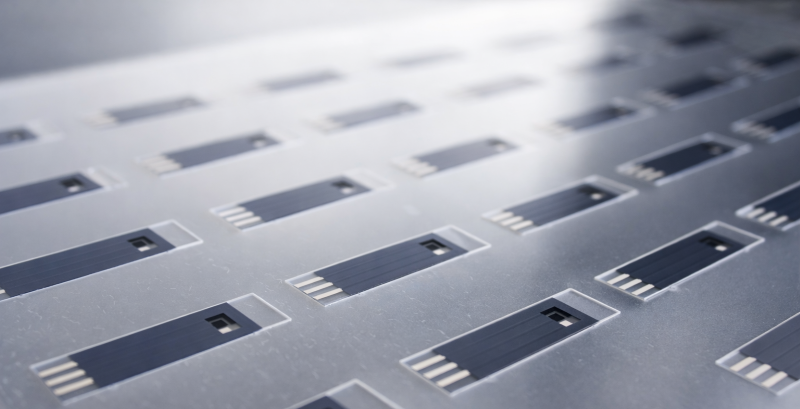
Scaling a diagnostic test from prototype to mass production is one of the most technically demanding transitions in medical device development. A prototype that performs well in a lab environment must be transformed into a product that performs consistently across thousands or millions of units, meets regulatory requirements, and can be manufactured at a cost that makes commercial sense. Many development teams underestimate how much changes between those two states. Understanding where the process typically breaks down is the first step toward navigating it successfully.
The path from an early-stage IVD prototype to full diagnostic device production involves design transfer, process validation, quality system integration, and manufacturing partner selection. Each stage introduces complexity that compounds if handled out of sequence. The sections below address the most common failure points and what a structured scale-up approach looks like in practice.
Where most diagnostic scale-ups break down
The majority of IVD scale-up failures share a common root cause: design decisions made during prototyping that were never evaluated for manufacturability. When a prototype is built to prove a concept, materials and processes are chosen for speed and availability, not for consistency at volume. When those same choices are carried into production, they create bottlenecks that are expensive to resolve late in the process.
Several specific failure points appear repeatedly in diagnostic manufacturing transitions:
- Substrate and material variation: Materials sourced in small quantities for prototyping often have different lot-to-lot tolerances than production-grade equivalents. Electrochemical sensors and microfluidic structures are particularly sensitive to these variations.
- Manual process steps that do not transfer to automated production: Handcrafted prototype assembly masks real process capability. What takes a skilled technician minutes in a lab may require an entirely different approach at scale.
- Undocumented chemistry and process parameters: If the conditions that produce a working prototype are not formally captured, reproducibility becomes a matter of institutional knowledge rather than a controlled process.
- Cost per unit not treated as a design constraint: Manufacturing tools and process choices made without cost modeling often result in unit economics that are not viable at commercial volumes.
Addressing these issues requires deliberate design-for-manufacture thinking early in the development cycle, not as a retrofit once problems emerge at scale.
Design transfer: turning a prototype into a manufacturable product
Design transfer is the formal process of transferring a validated prototype to defined, reproducible manufacturing. For diagnostic devices, this means documenting not just what the product is, but exactly how it is made and under what conditions it performs within specification.
For electrochemical diagnostic devices, this process involves converting prototype-level electrode structures and microfluidic geometries into production-ready specifications. Printing parameters, lamination sequences, laser cutting tolerances, and biofunctionalization protocols all need to be defined with enough precision that the process can be executed consistently by production equipment rather than by individual skill. In cleanroom environments, where humidity, temperature, and contamination control directly affect biosensor performance, those environmental parameters become part of the process specification.
What good design transfer documentation covers
A complete design transfer package for a diagnostic device typically includes material specifications with approved supplier lists, process parameter ranges with acceptance criteria, equipment qualification requirements, and inspection and test methods tied to functional performance. For devices involving printed electrodes or microfluidic cartridges, the transfer documentation must also address how process variation is controlled across high-volume printing runs, whether sheet-to-sheet or roll-to-roll.
The goal of design transfer is not simply to hand over a recipe. It is to establish a manufacturing process that a quality system can govern and that regulatory reviewers can audit. Gaps in transfer documentation are among the most common findings in manufacturing site inspections. Investing in thorough documentation at this stage protects the entire program downstream. Screentec’s R&D and prototyping process treats design transfer readiness as a built-in milestone, not an afterthought.
Regulatory and quality requirements at production scale
Moving a diagnostic test into mass production means operating within a formal quality management system aligned to the applicable regulatory framework. For IVD devices, the relevant standards include ISO 13485 for quality management, and depending on the target market, EU IVDR (2017/746) or FDA 21 CFR Part 820. These frameworks define how production processes must be controlled, monitored, and documented.
At prototype scale, quality oversight is often informal. At production scale, it must be systematic. Process validation becomes a regulatory requirement, not a best practice. This means demonstrating, through documented studies, that the manufacturing process consistently produces a product meeting its specifications. For diagnostic devices, process validation typically covers installation qualification (IQ), operational qualification (OQ), and performance qualification (PQ) for each critical manufacturing step.
Supplier qualification and change control
Production-scale quality systems also require formal supplier qualification. Every material and component used in the final device must come from a qualified supplier operating under documented quality agreements. Any subsequent change to a material, process, or supplier must go through a change control process before implementation. This is a significant operational shift from the flexibility typical of prototype development, and teams that have not planned for it often experience delays when they encounter their first production-level change request.
Regulatory submissions for IVD devices require manufacturing information that can only come from a production-ready process. The earlier a development team engages with these requirements, the less rework is needed to bring the manufacturing process into compliance before submission.
Choosing the right manufacturing partner for diagnostic scale-up
The choice of a contract manufacturing partner has a direct impact on how smoothly a diagnostic test scales. A manufacturing partner that is involved only at the production stage will encounter the same design-for-manufacture gaps described earlier. A partner engaged during the prototype-to-production transition can identify those gaps before they become costly problems.
For IVD and point-of-care diagnostic devices, the relevant manufacturing capabilities go beyond general contract manufacturing. Electrochemical sensor production, microfluidic structure fabrication, biofunctionalization, and cleanroom assembly are specialized capabilities that not all CDMOs offer. Evaluating a potential partner means assessing not just whether they have the equipment, but whether their process development expertise, quality system, and production environment match the specific requirements of the diagnostic platform being scaled.
Key criteria for evaluating a diagnostic CDMO
- ISO 13485 certification covering relevant manufacturing processes: The partner’s quality system must cover the specific processes being contracted, not just general manufacturing.
- Experience with the relevant device technology: A partner with direct experience in printed electrochemical sensors or microfluidic cartridges will identify process risks that a general manufacturer would miss.
- Ability to support design transfer, not just execute it: The best manufacturing partners contribute technical input during transfer, not just receive documentation.
- Cost-per-unit visibility from the start: Manufacturing tool selection should be made with upscaling economics in mind. A partner who treats cost as a variable from day one will produce better commercial outcomes.
- Controlled production environments: Some diagnostic devices require specific humidity or contamination conditions during manufacturing. Confirm the partner can meet those requirements before committing.
Screentec’s IVD manufacturing capability is built on over 35 years of printed electronics experience, with production processes that span custom screen-printed electrode structures, microfluidic cartridges, multilayer lamination, and nitrogen gas pouching. The production environment includes an ISO 5 white room for biofunctionalization and electrochemical characterization, as well as roll-to-roll and sheet-to-sheet printing capacity for high-volume runs.
Scaling a diagnostic test successfully requires the right partner engaged at the right stage. If a diagnostic device is approaching the transition from prototypes to production and the manufacturing strategy is still open, it is worth discussing the specifics before design decisions become harder to change.
Reach out to Screentec’s technical team to discuss your diagnostic scale-up requirements and find out whether the manufacturing process is ready for production volumes.