E-Textiles and Printed Electronics for Smart Textile Applications
E-textiles, also known as electronic textiles or smart textiles, combine fabrics with electronic functionality that is printed, laminated, embedded, or otherwise integrated into the textile structure. The demand for e-textiles is growing across healthcare, sports, defense, security, industrial applications, and consumer apparel. However, integrating reliable electronic functionality into garments requires materials and manufacturing processes that can withstand the mechanical demands of textiles, including stretching, bending, movement, and repeated wear.
Stretchable Printed Electronics for E-Textiles
Screentec manufactures printed electronic structures for e-textiles using stretchable silver, carbon, and dielectric pastes on flexible TPU substrates. These materials enable conductive circuits and functional structures to be incorporated into flexible textile products.
Depending on the application, our printed electronics technology can be used for:
- Textile-integrated electrodes for biosignal measurement
- Conductive traces and electrical connections
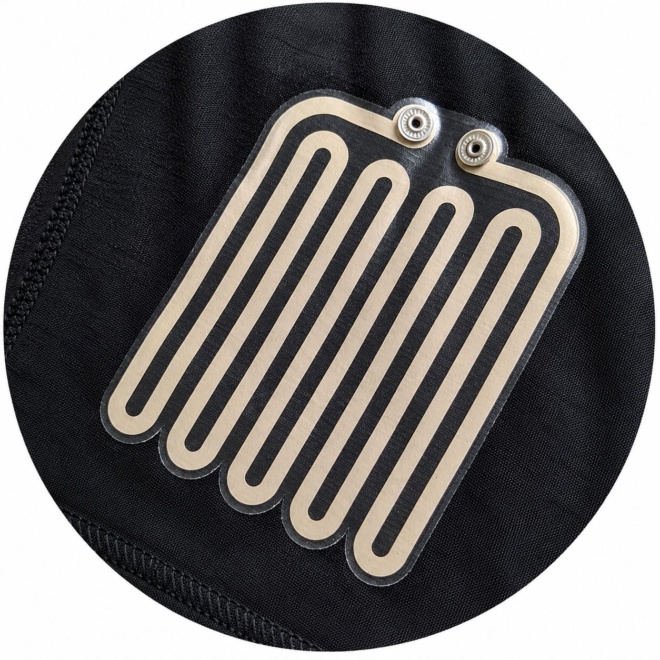
- Printed heating elements for garments
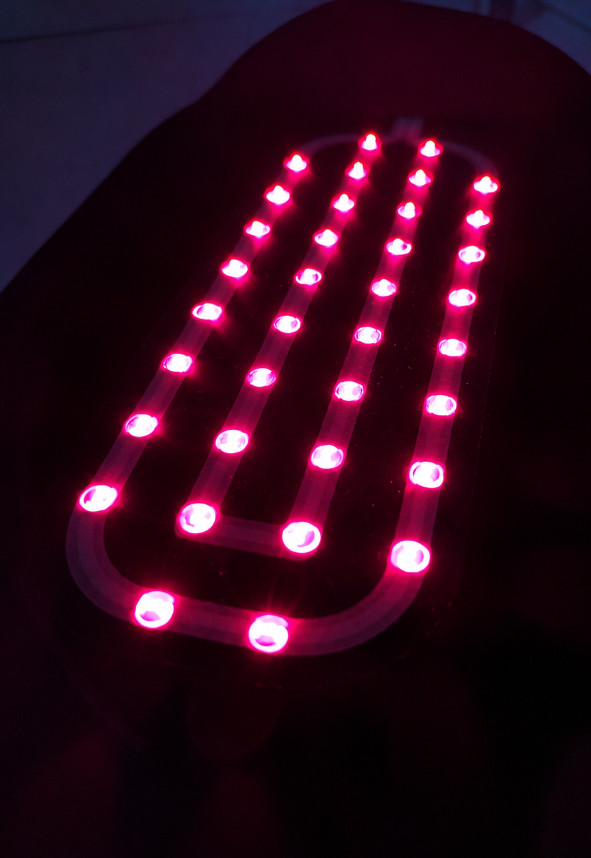
- Integration of LEDs, sensors, and other SMT components
- Flexible connections between textile structures and external electronics
Because the base circuit is produced using printed electronics, its shape, dimensions, connection points, and component placement can be customized around the textile and the intended application. This gives product developers more freedom than a standard off-the-shelf electronic structures.
Flexible Hybrid Electronics and Wearable Sensors
For more advanced smart textile applications, printed electronics can be combined with sensors and conventional electronic components to create Flexible Hybrid Electronics (FHE). This enables functions such as movement and physiological monitoring, environmental sensing, positioning, user interaction, and data transmission to be integrated directly into lightweight and flexible wearable products. The result is intelligent textile systems that can gather information about the wearer and their surroundings while maintaining flexibility and wearability.
Screentec provides integration-ready parts in both sheet and roll formats, or we can directly integrate them into your textile products for seamless functionality.
Dual-Use Wearable Technology
A major advantage of smart textile technology is its potential for dual-use applications. A wearable sensor developed for sports performance monitoring, for example, may use similar integration principles as a sensor designed to monitor personnel operating in demanding field conditions. Likewise, textile-integrated heating can provide additional thermal comfort for professionals working in cold environments as well as users in outdoor, sports, diving, or defense applications.
At Screentec, we focus on the technology behind these solutions: how printed electronics, sensors, conductive structures, heating elements, and electronic components can be reliably integrated into wearable products.
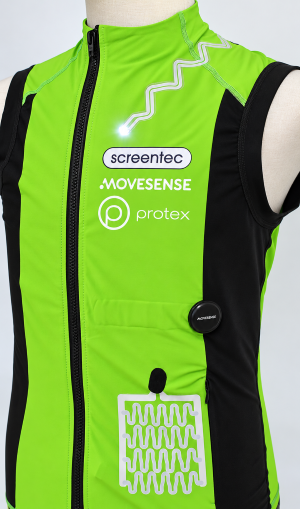
E-Textile Development with Protex Balti and Movesense
Screentec has partnered with Protex Balti and Movesense Oy to support companies developing integrated e-textile solutions. Protex Balti contributes textile product development and manufacturing expertise, while Screentec provides printed electronics, textile-integrated electrodes, conductive structures, and flexible hybrid electronics with suitable surface-mounted components. Movesense provides wearable sensor technology for ECG, movement, and other signal measurements. Together, these complementary capabilities support the development of smart textile solutions for example for Medical, Sports, Defence and Security fields.
This collaboration helps connect smart textile design, printed electronics, sensor technology, and manufacturing within one development platform.
Research on Printed Electronics and E-textiles
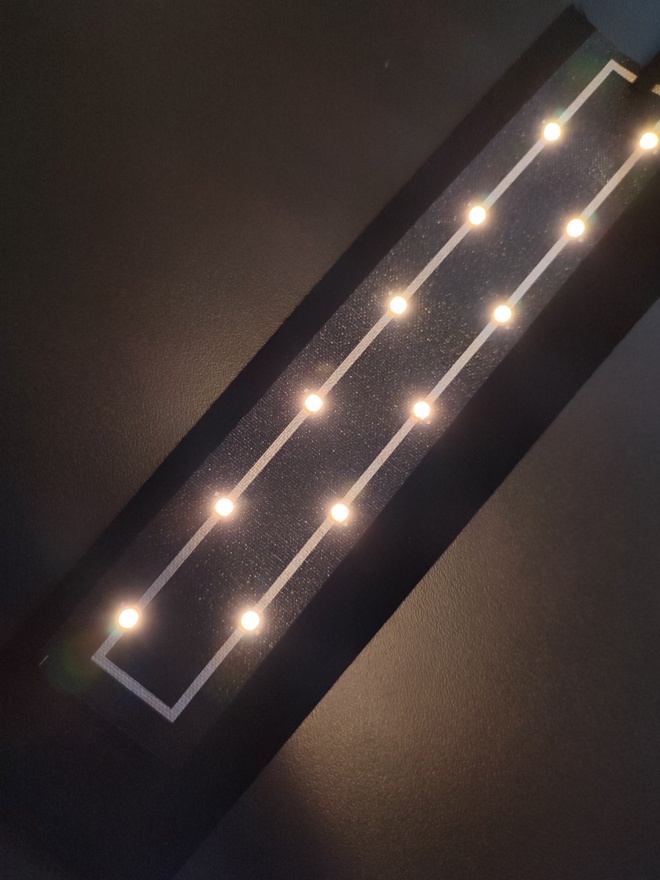
Screentec has developed a material combination and manufacturing process for integrating surface-mount technology components into flexible e-textile structures. Depending on the application, LEDs, sensors, connectors, and other suitable components can be incorporated into the printed circuit. The component layout and supporting structures are designed with the movement and mechanical requirements of the textile in mind.
In collaboration with VTT Technical Research Centre of Finland, we have studied the durability of textile-integrated flexible hybrid electronics and printed structures containing SMT components. This research has resulted in a proven material stack and process that helps the integrated components remain functional when the structure is stretched.
Screentec is actively participating in E-textile related conferences to take on the development and latest trends on E-textile manufacturing.
E-textiles with Integrated SMT Components
We have a material combination and process available that suit for manufacturing E-textiles with integrated SMT components.
Whether the component is a LED or sensor, it is possible to integrate that as part of the E-textile in a durable way.
From E-textile Research to Manufacturing
From 2019 to 2021, Screentec participated in WEARPLEX, an EU-funded research project focusing on developing new technology for smart clothing and wearable applications.
The project explored the use of printed electronics and printed transistors on fabrics. One of its key developments combined electromyography (EMG) measurement and functional electrical stimulation (FES) within the same electrode structure. This made it possible to switch between EMG recording and FES stimulation using the same electrodes, controlled through an user-friendly application. The technology demonstrated potential for medical rehabilitation, smart clothing, and textile-based interfaces for controlling devices and systems.
Today, Screentec applies knowledge gained through research and development projects to the manufacturing of printed electronic structures that can be laminated onto different kind of textiles. This approach supports the cost-effective development of customized e-textile products, and provides a practical route from research prototypes toward scalable manufacturing.
Whether your application is intended for industry, defense, public authority, sports, outdoor, or civilian use, integrating electronics into textiles requires the right combination of materials, electronics, and manufacturing know-how.

Sustainability with E-textiles
Typically, medical electrodes are single-use patches, but by manufacturing these patches on textile, it is possible to make the patch multi-use. This approach significantly enhances the sustainability of the electrodes while maintaining high performance. Key considerations for multi-use electrodes include washability and secure attachment to the user to ensure accurate signal transmission. The materials used by Screentec in our E-textile electrodes are proven to withstand up to 50 wash cycles in a washing machine.
Detailed study for each design is needed to ensure the wanted washing cycle amount.
Frequently Asked Questions – E-textiles
How can printed electronics be integrated into textiles?
Printed electronics can be integrated using flexible and stretchable printed structures that are laminated or otherwise incorporated into the textile. The integration method is selected according to the textile, required functionality, flexibility, stretchability and intended use environment.
Can electronics be printed directly onto textiles?
Yes, in some applications. However, electronics are most often printed onto a flexible or stretchable carrier, such as TPU, and subsequently integrated into the textile. Screentec evaluates the most suitable approach based on the textile, required performance and manufacturability.
What conductive materials can be used in e-textiles?
Screentec works with stretchable silver- and carbon-based conductive inks, as well as dielectric materials for insulation and multilayer structures. Material selection depends on factors such as conductivity, stretchability, substrate, mechanical requirements and intended application.
What electronic functions can be integrated into textiles?
E-textile solutions can incorporate printed sensors, biosignal electrodes, heating elements, LEDs and other electronic components. Printed circuits can also be combined with SMT components and suitable interconnections to create more advanced flexible hybrid electronic solutions.
Can Screentec support dual-use wearable applications?
Yes. Screentec develops and manufactures e-textile components for medical, health and performance monitoring as well as industrial, defense and other dual-use wearable applications. The materials, construction and manufacturing process are selected according to the application’s functional, environmental and regulatory requirements.
How can motion artifacts be reduced in biometric monitoring garments?
Keeping the textile-integrated electrode securely positioned against the skin is critical. Garment fit, compression and electrode placement should be optimized together with the electrode structure. Signal processing can further improve signal quality but cannot fully compensate for an unstable electrode–skin interface.
Are e-textile solutions washable?
Yes, e-textiles can be designed for washability, but performance depends on the materials, integration method, connectors and protection of electronic components. Washability requirements should be defined early and tested on the complete assembly under conditions representative of actual use.
When should biocompatibility and regulatory requirements be considered?
For medical e-textiles, these requirements should be considered from the beginning of material and construction selection. Early consideration of skin-contact materials, intended contact duration and applicable requirements such as ISO 10993 can help avoid costly material or design changes later.
How do I know which e-textile construction method is right for my product?
The right approach depends on the required functionality, circuit geometry, flexibility, durability and production volume. Screentec can evaluate the application and recommend a suitable combination of printed electronics, flexible substrates, textile integration and hybrid electronics.
Can Screentec support both prototyping and serial production of e-textiles?
Yes. Screentec supports e-textile projects from technical feasibility and prototyping through pilot production and scalable serial manufacturing. Considering materials, integration methods and manufacturing processes early helps reduce redesign when transitioning from prototype to production.