Telemonitoring in obstetric care is gaining significant interest, particularly following the COVID-19 pandemic. Developing comfortable, reliable, and non-invasive wearable solutions for continuous fetal monitoring at home presents a key challenge for healthcare innovators.
A novel non-invasive fetal electrocardiogram (NI-FECG) device, powered by a Screentec sensor, was developed and assessed for its feasibility in remote and extended use. The study aimed to understand pregnant patients’ perceptions before and after using this innovative technology. The integration of the Screentec sensor enabled a wearable solution designed for comfort and extended use, directly addressing critical user experience factors.
Data Collection & Methodology
This clinical feasibility study was prospectively registered on the Australia New Zealand Clinical Trials Registry (ANZCTRN12621001260819). Data was collected from seventy participants, all from 36 weeks’ gestation onwards, who completed comprehensive pre- and post-use surveys. The analysis incorporated both sentiment analysis and natural language processing (NLP) with clustering techniques to derive deeper insights into the consumer experience.
Outcomes
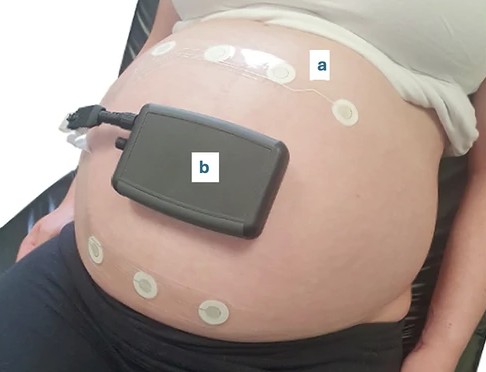
Research-grade device used in the study consists of a wearable sensor patch (a) and a hardware unit (b) for acquiring electrophysiological data. The current iteration of the commercial-grade device can be accessed at https://www.kalihealthcare.com/
The study, published in npj Digital Medicine, highlighted the positive consumer feedback and the comfort provided by the device and its integrated Screentec sensor. The key findings demonstrated exceptional user acceptance and comfort:
- 90% of pregnant women found the device and the sensor comfortable to wear
- 91% found the sensor comfortable to remove
- Only 3% of participants reported high skin irritation, underscoring the sensor’s excellent skin compatibility
These results validate the Screentec sensor’s ability to support non-invasive, comfortable, and extended fetal monitoring, offering a promising solution for the future of remote obstetric care.
Reference:
Karmakar, D., Paul, T., Keenan, E. et al. Consumer insights from a feasibility study on remote and extended use of a novel non-invasive wearable fetal electrocardiogram monitor. npj Digit. Med. 8, 216 (2025).
Read the full study here: https://doi.org/10.1038/s41746-025-01628-9