
Screentec is committed to addressing the environmental challenges of disposable medical electrodes. Through collaborations like the EU project Sustronics, we are pioneering sustainable wearable electrode solutions using eco-friendly substrates and conductive pastes such as copper and carbon. We integrate SMT components onto diverse materials like paper and textiles, aiming to reduce e-waste and promote industry-wide sustainable practices for the growing demand in health and wellness monitoring.
Exploring three electrode solutions specifically designed for ECG, EEG, and Bioimpedance measurements, Screentec focuses on: disposable electrodes with plastic and silver printing; electrodes with more sustainable substrates and copper and carbon printing; and multi-use electrodes integrated into textiles with plastic and silver printing. While each solution has its advantages and challenges, the integration of sustainability into wearable electrodes promises significant environmental benefits.
Solution 1: Disposable Electrodes with Plastics and Silver Prints
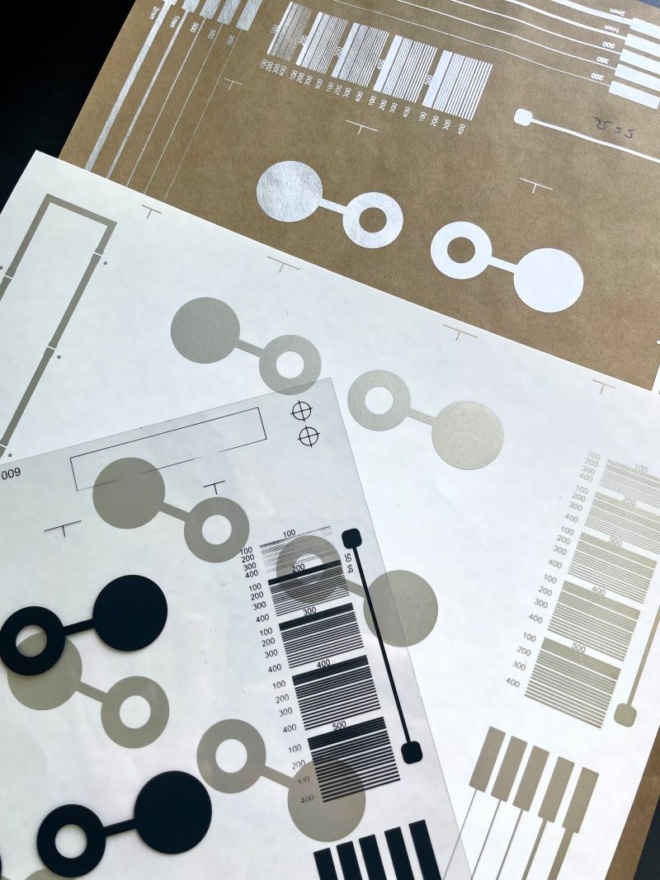
PET substrates combined with carbon paste to develop lightweight, durable and flexible electronic components. Included: a test sample of paper-based substrates with silver prints.
The first solution involves disposable electrodes made from conventional plastic substrates and silver conductive prints. Screentec is currently a manufacturer of these electrodes, ensuring convenience and reliability in various medical applications. Single-use electrodes should be designed to be as simple as possible. Key variables in their design include wear time, wear location, and the need for stretchability. Additionally, they should have an easy to use and cost-effective connector solution.
Printed disposable electrodes have several advantages over standard single-use ECG electrodes. Each use ensures high signal quality, which is critical for accurate diagnosis. They can be worn for days or weeks, depending on the application. They also offer high performance and reliability with a typically long shelf life due to the stability of the materials used. The cost of these electrodes is moderate to high driven by the cost of silver, but the cost per day per use is generally lower.
However, there are disadvantages. They have a significant environmental impact due to disposal of non-biodegradable materials. Over time, this results in a higher price per use, considering environmental costs and the need for continuous replacement. Improvements in sustainability can be achieved by using paper, recycled plastics, or compostable substrates and substituting copper or carbon for silver paste.
Solution 2: Electrodes with Sustainable Substrates and Copper and Carbon Prints
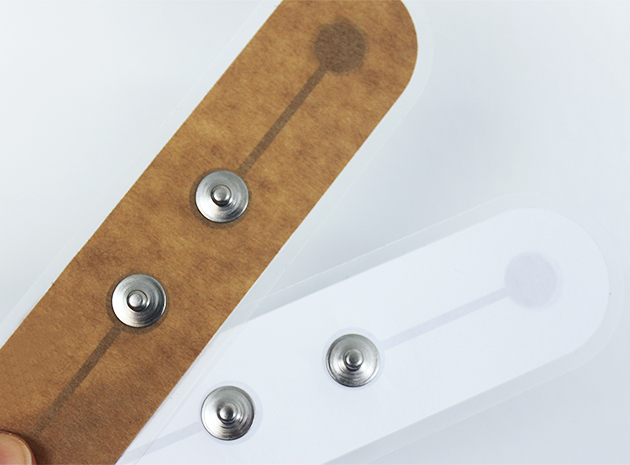 The second solution features disposable electrodes made from environmentally friendly substrates combined with copper and carbon prints. This option improves sustainability by utilizing renewable or recyclable substrates and less precious conductive materials. Its functionality is comparable to traditional electrodes offering effective conductivity.
Silver pastes are widely adopted by several suppliers, and their processing is an established practice that has been used for decades. Carbon pastes are also widely available and typically processed in a similar way to silver pastes. “However, conductive traces made with carbon have a resistance value approximately 1000 times higher than those made with silver. This makes carbon unsuitable for applications requiring low resistance, such as EEG”, says Mikko Paakkolanvaara, CTO of Screentec Oy.
Copper pastes, which have been available for printed electronics for some years now, present a promising alternative. Although there are currently fewer suppliers of copper pastes compared to silver or carbon, copper offers similar resistance values to silver, making it a suitable option for low-resistance applications like EEG electrodes. However, copper’s tendency to oxidize poses challenges. “The processing of copper pastes typically requires an extra step during manufacturing, usually during the curing or sintering process, to prevent the formation of a non-conductive layer due to oxidation”, Paakkolanvaara adds.
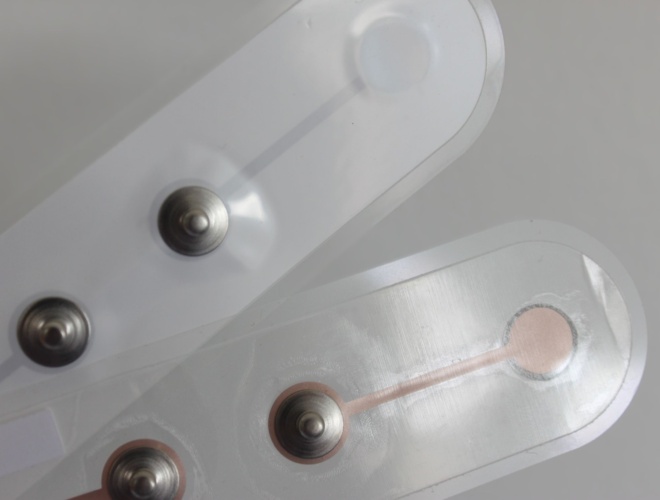 The shelf life of these sustainable electrodes depends on the stability of the substrate, which can be shorter than that of plastic-based electrodes. However, the cost is generally lower than in silver-based electrodes, with savings coming from the use of more abundant materials like copper and carbon.
Solution 3: Multi-use Electrodes Integrated into Textiles using Plastics and Silver Prints
The third solution is to integrate multi-use electrodes into textiles using plastics and silver conductive components. However, reusable electrodes should be designed to be as durable as possible to increase sustainability. TENS electrodes are a good example of a cost-effective multi-use solution. Integrating electrodes into textiles presents additional challenges in the product structure. Regular rinsing with water or machine washing is often required, and factors such as washing time, temperature, and spin cycles have a significant impact in their lifespan. Users may often clean electrodes against instructions, which can lead to complicated reclamation issues. Additionally, the connectors need to be designed for multiple use.
Reusable electrodes have a lower environmental impact and a longer lifespan, making them more sustainable over time, particularly when considering the number of times they can be used. The sustainability of these electrodes improves significantly with increased use, as their higher initial cost is offset by their extended usability over many cycles. This results in a lower price per use, provided that the number of uses is high enough to justify the initial investment.
However, multi-use electrodes integrated into textiles require careful consideration of washability, which adds complexity to their design. There is also the potential for signal quality degradation over their lifecycle and a higher price per product compared to single-use options. Additionally, there is a risk of contamination if the electrodes are not properly cleaned and maintained, which can pose health risks.
Through ongoing research and development efforts, Screentec is continuously testing and refining new, more sustainable alternatives. These advancements not only promise to reduce the carbon footprint of medical devices but also contribute to improved functionality, shelf life, and cost-effectiveness.