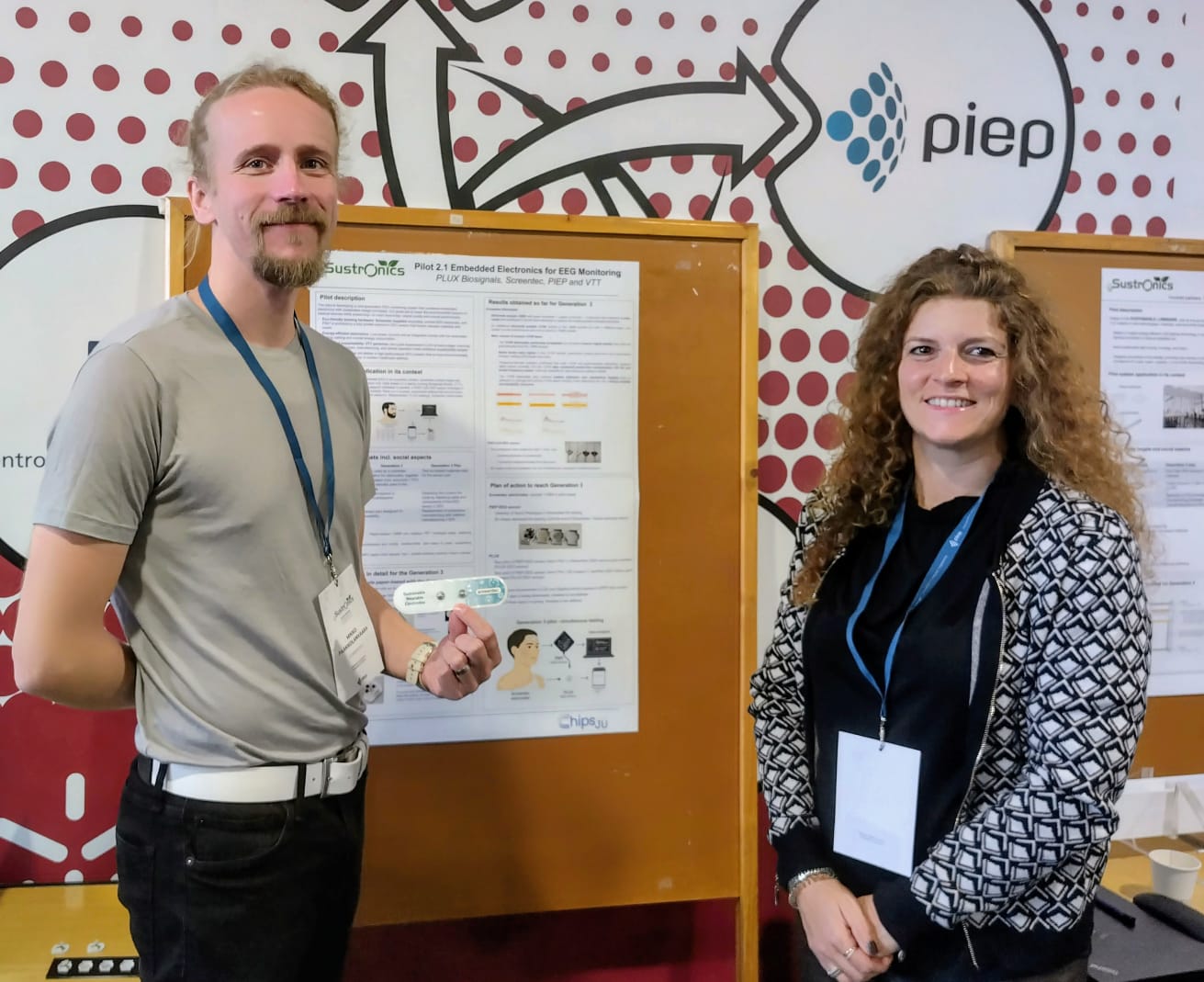
European Collaboration for Smarter, More Sustainable Neurotechnology
In the EU and Business Finland -funded Sustronics project, Screentec and Plux Biosignals teamed up to develop and evaluate a new generation of printed EEG electrodes designed for both performance and sustainability. The goal? To show that high-quality biopotential monitoring can go hand in hand with eco-conscious design.
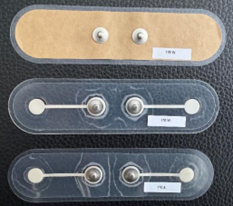
Test of 3 samples of Screentec single-lead EEG Electrodes
The Pilot 2.1 pilot specifically tested different variants of single-lead EEG electrodes from Screentec, each representing a different combination of substrate and conductive materials. In addition to the reference PET + silver electrode, copper and carbon were used as conductive traces, and paper and other more sustainable materials were used as substrate. Testing was carried out by Plux Biosignals using biosignalsplux EEG sensors, with reference to CardinalHealth™ Kendall™ hydrogel electrodes, which is the current clinical gold standard for EEG.
The pilot assessed the electrical and usability performance of Screentec’s printed electrodes during EEG signal acquisition. Each electrode was tested through a standardized protocol measuring alpha, beta, theta, and gamma brainwave activity during three phases: eyes open, eyes closed, and eye blinking. The study also analyzed signal waveform quality, frequency-domain behavior (FFT), adhesion and skin comfort, as well as material sustainability and visual properties.
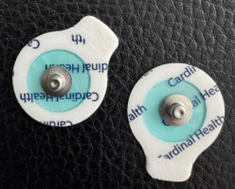
CardinalHealthTM from KendallTM hydrogel electrodes
The tests were conducted under controlled lab conditions with simultaneous dual recordings from both Screentec and reference electrodes placed on the forehead.
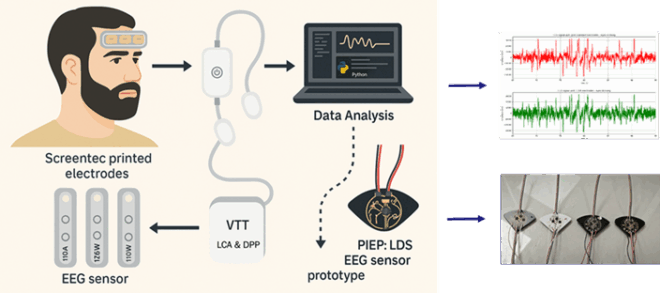
Key technical findings
The results confirm that the Screentec electrodes achieved nearly identical EEG performance to the reference electrodes in all tested frequency ranges. The prototypes could successfully detect alpha waves (8–12 Hz) during eyes-closed conditions, which is a critical benchmark for EEG reliability.
The best variant tested was the paper-based electrode, which showed the lowest error rates and the most stable frequency response across all conditions. This variant was also least affected by 50 Hz mains noise. In practical terms, this variant achieved signal fidelity on par with conventional hydrogel sensors, with less than 3% deviation in key EEG bands.
Material properties and sustainability
Screentec’s electrode variants were designed to explore alternative, bio-based and recyclable materials. The best performing variant uses paper as the substrate and copper-based conductive adhesive, making it more environmentally friendly than the reference (PET + silver).
In terms of usability, Screentec electrodes were comfortable to wear and easy to remove, leaving no residue on the skin. Some pre-use adhesive loss was noted, suggesting that the skin adhesive used and shelf-life packaging will need further optimization for commercial readiness.
What makes the variant especially notable is its combination of sustainability and signal accuracy. It replaces single-use PET hydrogel pads with a recyclable, paper-based alternative, without compromising EEG data quality. No existing market solutions have achieved this balance between ecological performance and neurophysiological precision.
Currently, electrode technology is progressing from proof of concept toward pilot testing. While the electrodes are suitable for research and demonstration, the long-term goal is commercial deployment as part of eco-friendly, modular EEG systems that meet medical-grade performance criteria.
Collaboration as a catalyst
This project demonstrates the strength of European collaboration. By combining Screentec’s expertise in printed electronics and sustainable materials with Plux’s biopotential signal analytics, the Sustronics consortium is proving that responsible innovation can be technically competitive.
Learn more about the Sustronics project here.
Partners: Screentec | PLUX Biosignals
Project: Sustronics Pilot 2.1 – Embedded Electronics for EEG Monitoring
Author: Laura Kallo – Screentec Marketing