Possibilities with E-textiles
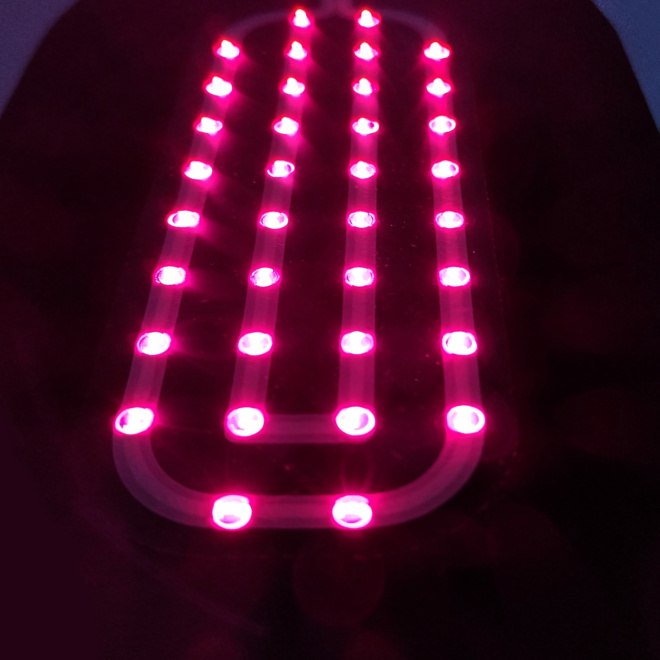
Screentec has conducted extensive testing on various materials and processes to develop advanced printed electronics solutions for E-textiles. By using stretchable silver, carbon, and dielectric pastes on flexible TPU substrates, we create electrical circuits capable of conducting electrical signals. This innovative approach enables the integration of textile-based electrode contacts for signal sensing, the incorporation of Surface-Mount Technology (SMT) components into flexible hybrid systems, and the design of heating elements for garments.
As the base electric circuit is made using printed electronics, we can customize the integration of electronic components to perfectly align with the textile design, offering limitless possibilities for garment innovation. Screentec provides integration-ready parts in both sheet and roll forms, or we can directly integrate them into your textile products for seamless functionality.
Co-operation with PROTEX AS
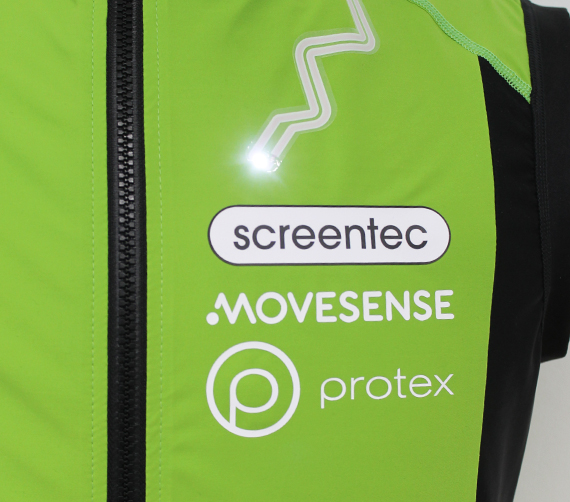
Screentec has partnered with Protex Balti and Movesense Oy to offer a manufacturing source for companies that are in need of E-textiles. The textile design and manufacturing capability from Protex combined with Screentec’s capability to produce different kind of printed electronics structures – even with surface mounted components – enables E-textile solutions for example for Military, Medical, Sports and Security fields. To finalize product platform, Movesense can bring their electronics suitable for ECG and other signal measurement capacities as part of the E-textile structure.
Research on Printed Electronics E-textiles
Screentec is actively participating in E-textile related conferences to take on the development and latest trends on E-textile manufacturing. In collaboration with VTT Technical Research Centre of Finland, we have conducted research on the durability of textile-integrated flexible hybrid systems and printed electronic structures with SMT components. This research has led to a proven material stack and process that ensures SMT components integrated into E-textiles remain functional even under stretching, which we have successfully implemented.
E-textiles with Integrated SMT Components
We have a material combination and process available that suit for manufacturing E-textiles with integrated SMT components.
Whether the component is a LED or sensor, it is possible to integrate that as part of the E-textile in a durable way.
From E-textile Research to E-textile Manufacturing
From 2019 to 2021, Screentec participated in a European consortium focused on a groundbreaking EU-funded project to revolutionize wearable technology. Through the use of fully printed transistors on fabrics, we aimed to create the next generation of smart clothing. The WEARPLEX technology combined Electromyography (EMG) and Functional Electrical Stimulation (FES) within the same electrode. This innovation allowed us to seamlessly switch between EMG recording and FES stimulation using the same electrodes, controlled through a user-friendly app. The approach developed under this project has significant potential across a wide range of applications, from medical rehabilitation to smart clothing that can function as a controller for various devices and systems.
Today Screentec is focusing on manufacturing of printed electronic structures that can be seamlessly laminated onto different kind of textiles. This innovative approach brings numerous opportunities for creating diverse E-textile solutions in a cost-effective manner.

Sustainability with E-textiles
Typically, medical electrodes are single-use patches, but by manufacturing these patches on textile, it is possible to make the patch multi-use. This approach significantly enhances the sustainability of the electrodes while maintaining high performance. Key considerations for multi-use electrodes include washability and secure attachment to the user to ensure accurate signal transmission. The materials used by Screentec in our E-textile electrodes are proven to withstand up to 50 wash cycles in a washing machine.
Detailed study for each design is needed to ensure the wanted washing cycle amount.